From Visibility to Certainty – How Hesai Lidar Powers Reliable 3D Perception with Ursa Dynamics’ LiCAM
A truck enters a construction site at 6:00 a.m.
A restricted perimeter is breached at night.
A crowd builds up at a public event entrance.
These are daily operational realities.
Yet many environments are still monitored through systems that struggle with consistency. Cameras depend on lighting. Analytics generate false alarms. Operators learn to ignore alerts.
What is missing is not data. It is reliability.
A New Approach to Real-World Monitoring
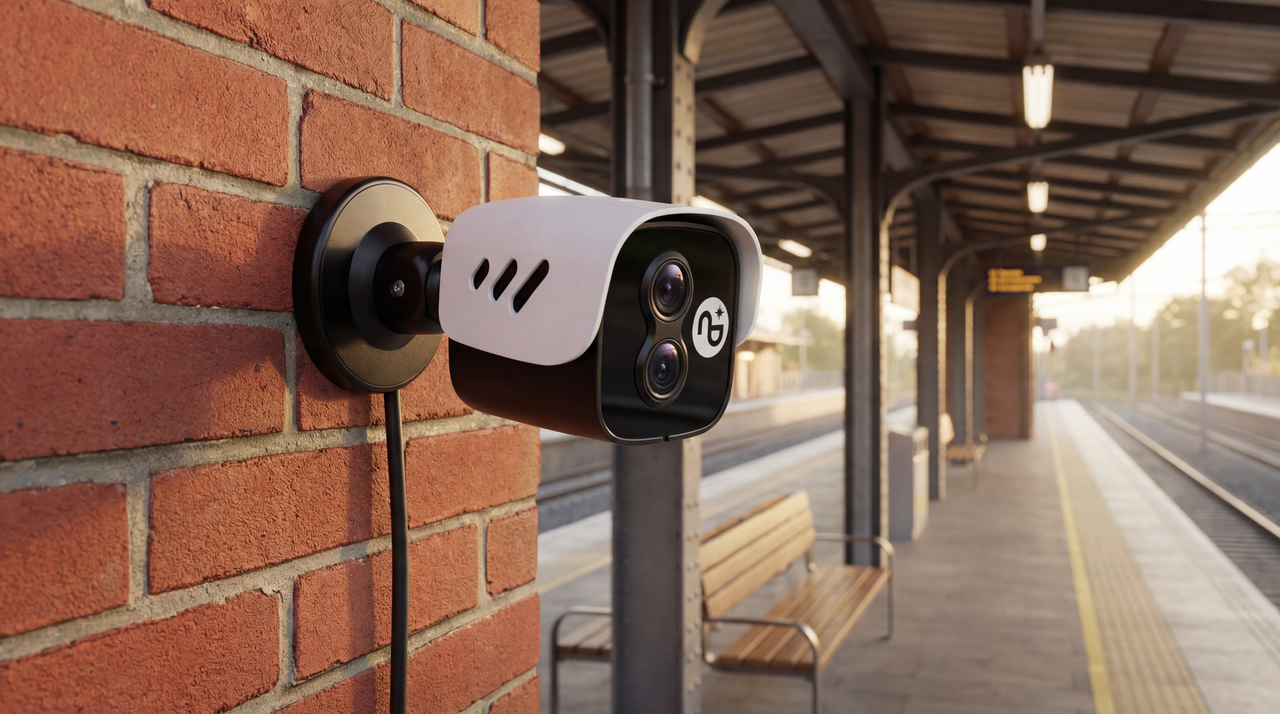
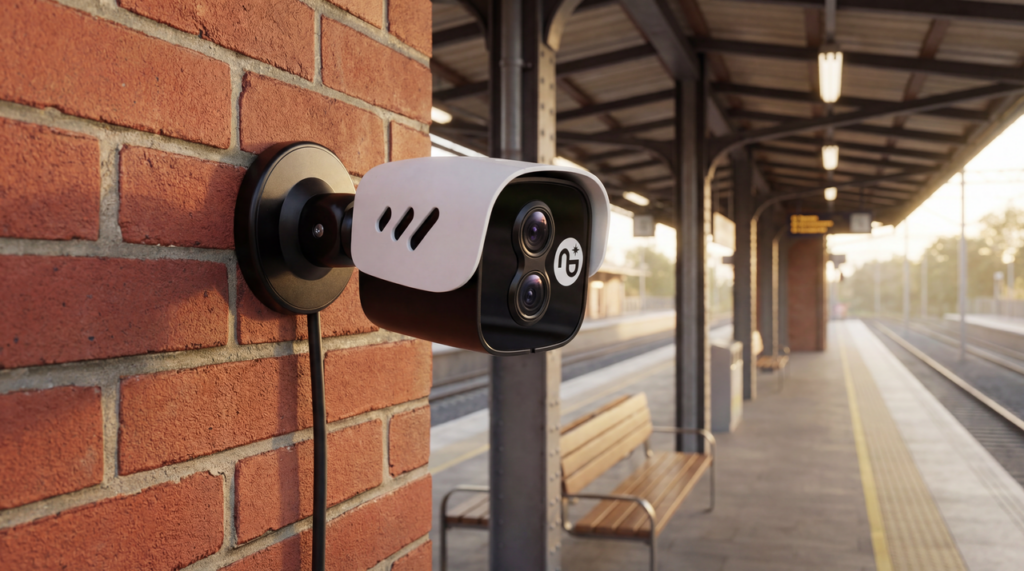
Ursa Dynamics addresses this gap with LiCAM – a solid-state 3D perception device built on Hesai’s FTX lidar.
Designed as a single Power-over-Ethernet unit, LiCAM delivers 140° × 105° coverage with detection up to 30 meters. It operates consistently across day and night, rain or fog, capturing depth, shape, motion, and distance in real time.
The shift is not just technical. It is operational.
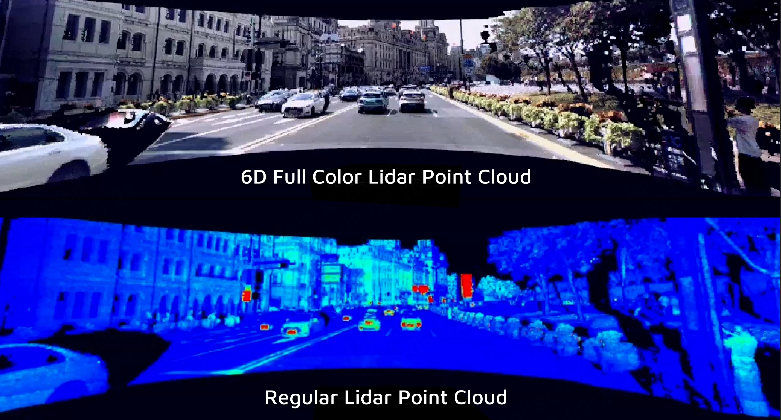
Instead of interpreting images, LiCAM measures space.
From False Alarms to Actionable Detection
In camera-based systems, motion alerts are often triggered by shadows, weather, or irrelevant movement. Over time, this reduces trust in the system.
LiCAM changes that dynamic.
Detection is based on physical presence in 3D space. An alert is triggered because an object occupies and moves through a defined zone, not because pixels change.
This directly improves a critical KPI: actionable detection rate.
Operators no longer need to filter noise. They can focus on real events.
Real Use Cases in Operation
The impact becomes clear in real-world deployments.
Construction and industrial sites
A single LiCAM unit monitors perimeter security at night while measuring stockpile volumes and truck loads during the day. The same sensor supports both safety and operational efficiency.
Traffic and infrastructure environments
LiCAM enables reliable detection of vehicles, cyclists, and pedestrians, supporting queue monitoring, congestion analysis, and safer intersection management.
Public spaces and venues
Crowd density and movement patterns can be measured in real time without identifying individuals. Operators gain accurate occupancy insights while maintaining full privacy compliance.
Across these environments, the advantage is consistency. The system performs reliably regardless of lighting, weather, or scene complexity.
Reliability Where It Matters
Real-world environments are dynamic. Lighting changes, weather shifts, and density fluctuates.
LiCAM maintains performance because it measures geometry rather than image intensity. Fog, darkness, or glare do not affect how objects are detected.
Equally important, the system behaves consistently over time.
The same zones trigger the same way. Measurements remain stable. Outputs stay predictable.
This reliability is what allows operators to trust the system in safety-critical scenarios.
Simplicity at Scale
Deployment complexity often limits adoption.
Traditional setups require multiple components – cameras, power systems, network infrastructure – each adding cost and increasing failure points.
LiCAM simplifies this with a single PoE+ connection.
Mount it. Connect it. Operate it.
With a rugged IP67-rated design and no moving parts, it is built for long-term outdoor deployment with minimal maintenance.
Privacy Without Compromise
Modern infrastructure must balance insight with responsibility.
Operators need data on movement, occupancy, and risk – but without collecting personal information.
LiCAM is designed around this requirement.
It captures shape, motion, and distance, not identity. No faces. No personal data. Only spatial awareness.
This makes it inherently suitable for GDPR-sensitive environments and public deployments.
Perception Powered by Flasheye
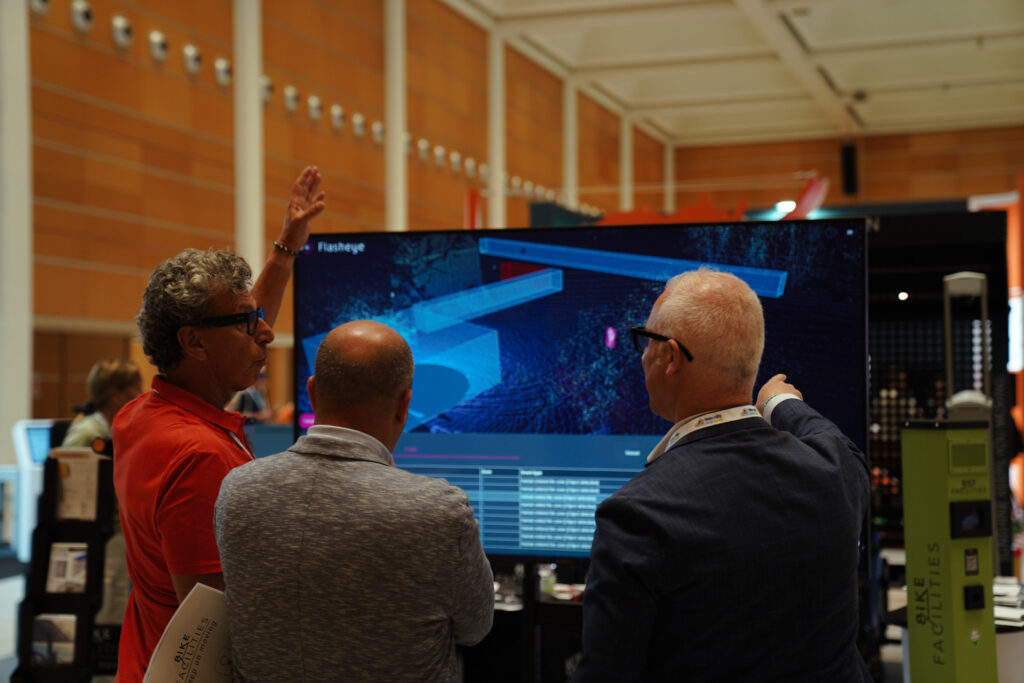
Behind LiCAM’s reliability is Flasheye, the lidar perception software that enables real-time understanding of 3D space.
Flasheye converts raw point cloud data into actionable insights, allowing LiCAM to detect, classify, and track objects directly at the edge with high precision. Detection is based on physical presence, not visual changes, ensuring consistent performance independent of lighting or environmental conditions.
Because it operates purely on spatial data, no personal information is captured; only geometry, motion, and behavior making it inherently privacy-preserving.
With support for standard interfaces such as JSON and MQTT, Flasheye integrates seamlessly into existing systems, turning LiCAM into a complete, deployable perception solution.
Powered by Hesai
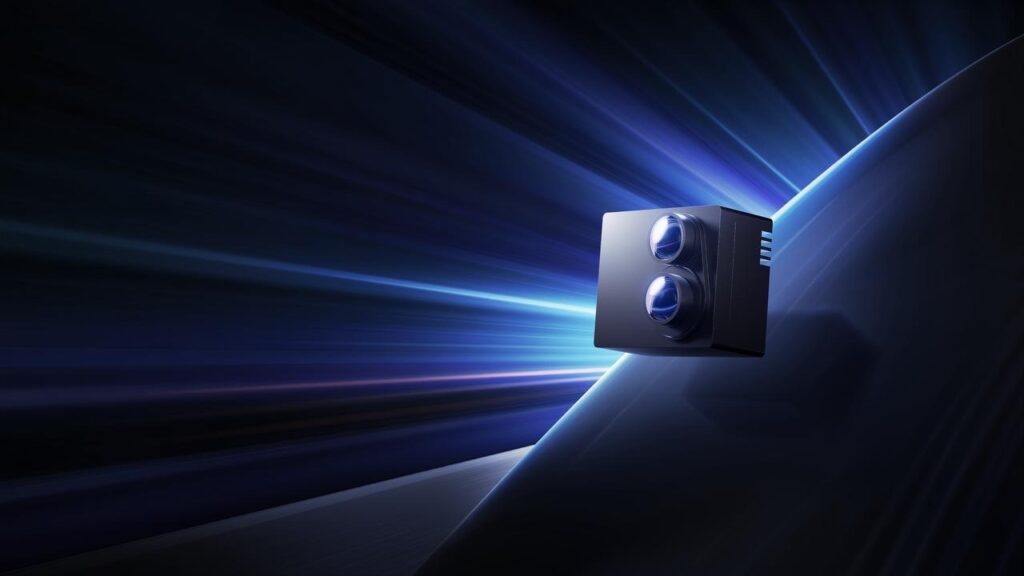
At the core of LiCAM is Hesai’s FTX solid-state lidar.
Hesai’s leadership in 3D lidar enables solutions like LiCAM to move beyond niche deployments into scalable, real-world applications. High performance, reliability, and manufacturability make it possible to deploy lidar across infrastructure, security, and industrial environments.
This is what turns advanced sensing into operational systems.
The Opportunity Ahead
Infrastructure is moving from visibility to certainty.
With LiCAM, operators can reduce false alarms, improve measurement reliability, and simplify deployment – all while maintaining privacy by design.
For integrators, infrastructure leaders, and technology partners, the opportunity is clear:
To move from monitoring environments to truly understanding them.
If you are exploring lidar for infrastructure, security, or smart city applications, contact Hesai to learn how solutions like LiCAM can be deployed in real-world environments.
Q&A – Lidar for Security and Infrastructure
What makes lidar more reliable than cameras in infrastructure?
Lidar detects physical presence in 3D space, making it less sensitive to lighting changes, weather, and visual noise.
What is actionable detection rate?
It measures how many alerts correspond to real events. Lidar improves this by reducing false positives.
Can one lidar system handle multiple use cases?
Yes. A single system can support security monitoring, traffic analysis, volumetric measurement, and crowd analytics.
Why is lidar suitable for privacy-sensitive environments?
It does not capture personal identity, only spatial data such as shape and movement.
Where is lidar used today?
Lidar is used in smart cities, traffic systems, industrial sites, and security applications worldwide.