From Controlled Environments to Real-World Autonomy: How Hesai Lidar Powers Outdoor Autonomous Mobile Robots with Innok Robotics
Step outside the factory, and automation starts to break down.
Surfaces become uneven. Lighting shifts constantly. Vehicles, people, and equipment move unpredictably. What works perfectly indoors often fails the moment conditions are no longer controlled.
Yet this is exactly where automation is needed most.
Where the Challenge Begins
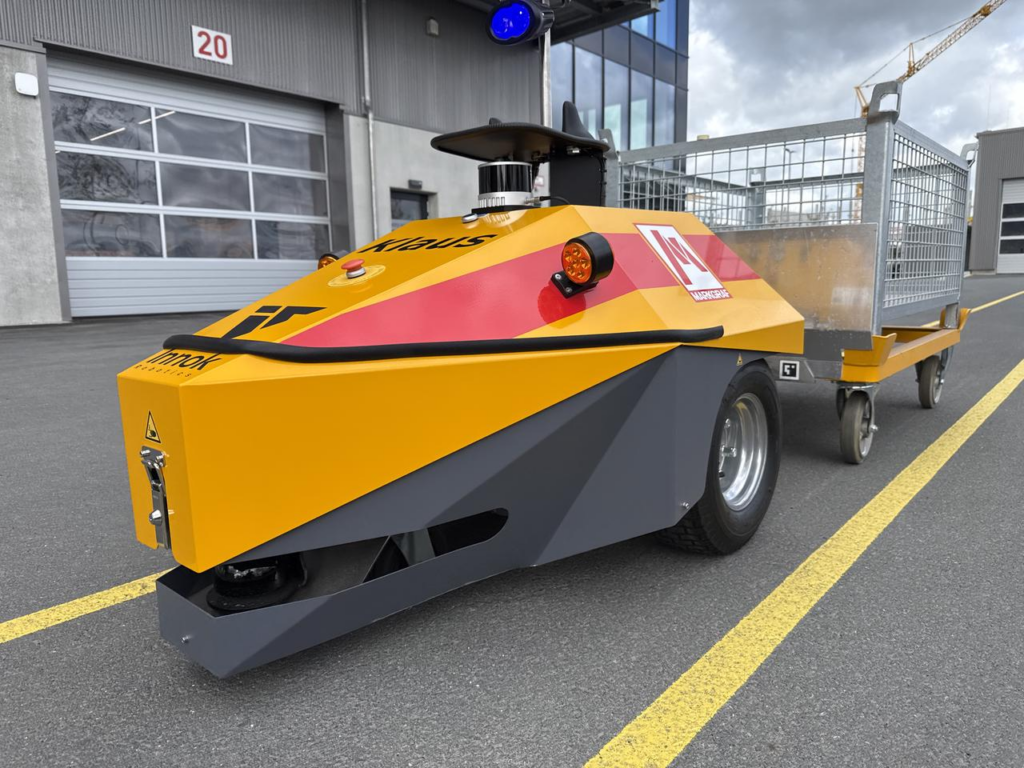
Industrial automation has reached high maturity inside buildings. But real operations extend beyond that boundary – across yards, between facilities, and into environments shaped by weather, terrain, and constant movement.
These conditions introduce continuous variability. A robot may transition from asphalt to cobblestone within seconds. Rain or glare impacts visibility. At the same time, it must safely navigate around forklifts, trucks, and pedestrians.
In these environments, reliability is not defined by peak performance. It is defined by consistency.
And that depends on perception.
Turning Uncertainty Into Spatial Awareness
Traditional sensing approaches struggle under these conditions.
Camera-based systems are sensitive to lighting changes. Simpler sensors lack the spatial resolution needed to interpret complex scenes. As variability increases, so does uncertainty – leading to false detections, unnecessary stops, and reduced operational efficiency.
Innok Robotics addresses this challenge by building its systems around lidar-based perception.
Lidar measures the environment directly in 3D space. It captures distance, shape, and movement independently of lighting, enabling stable environmental understanding across day and night, in clear weather or adverse conditions.
This shift – from interpreting images to measuring space – is what makes reliable outdoor autonomy possible.
From Perception to Real-World Operation
At the core of this approach is the Hesai XT32 lidar.
Its 360° field of view provides complete environmental awareness, eliminating blind spots in dynamic environments. High-resolution 3D data enables precise detection of obstacles, movement, and spatial relationships.
In practice, this translates into consistent performance across real-world scenarios.
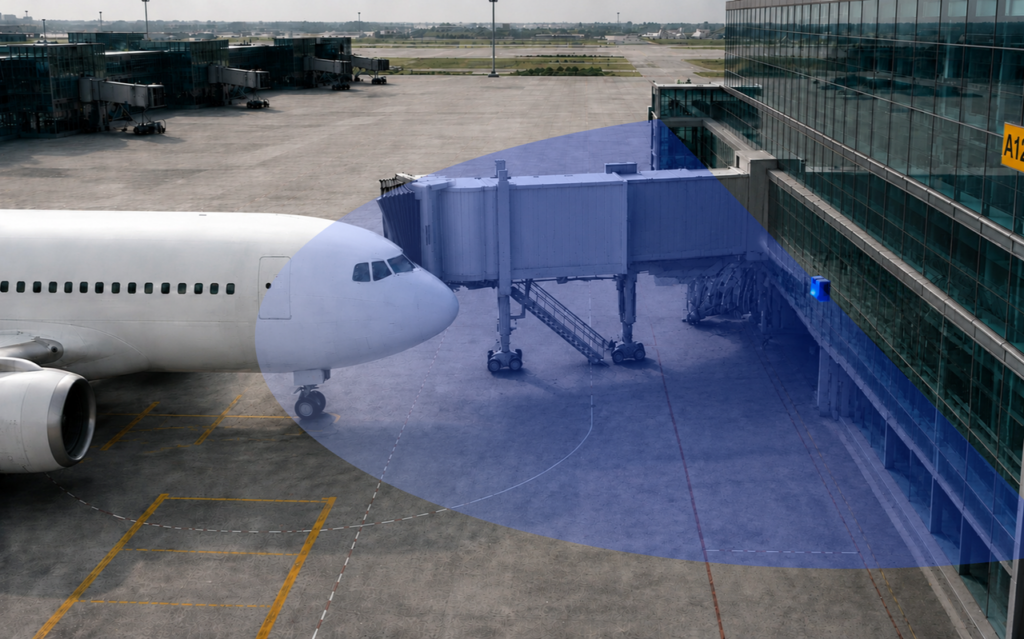
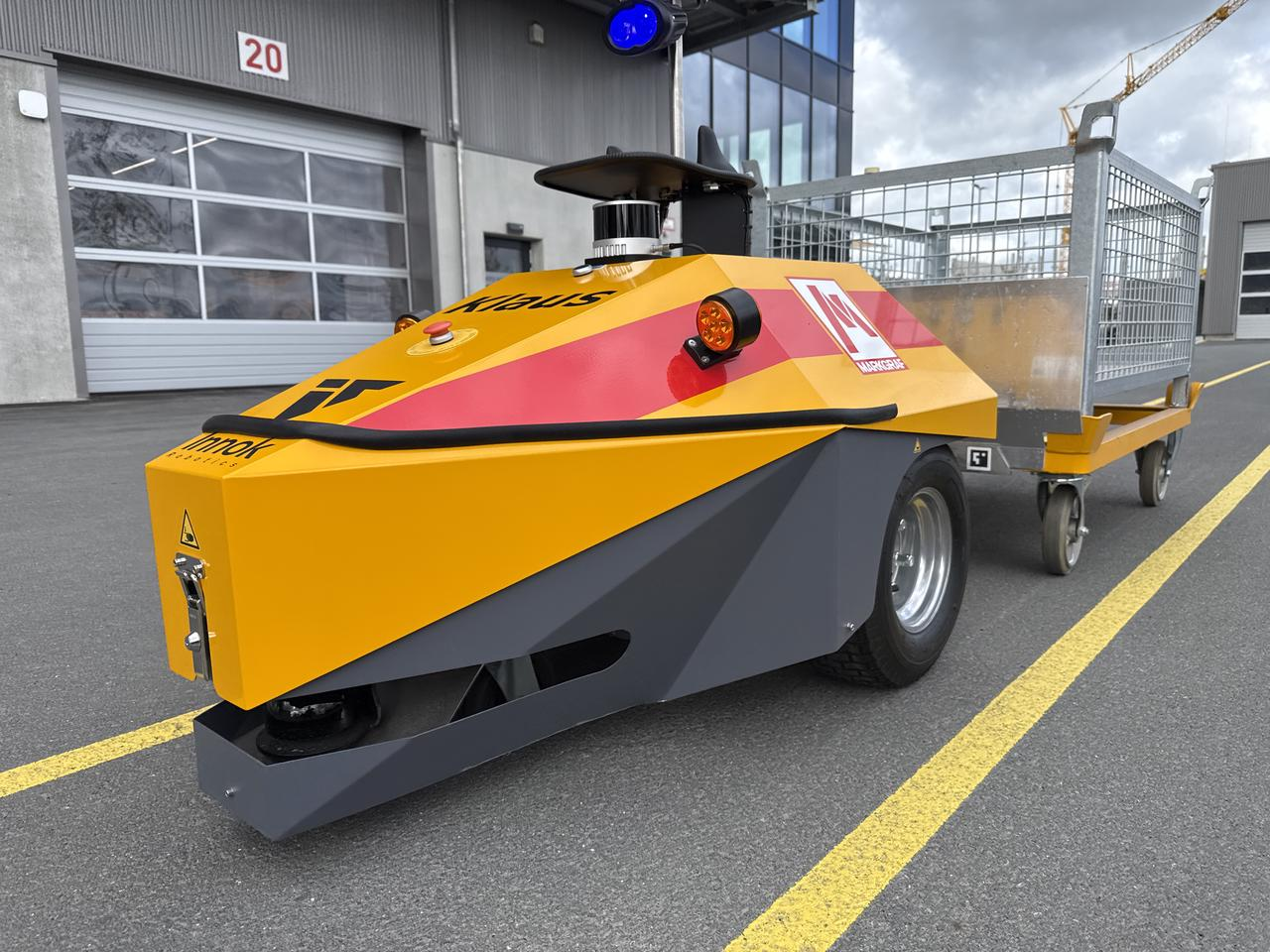
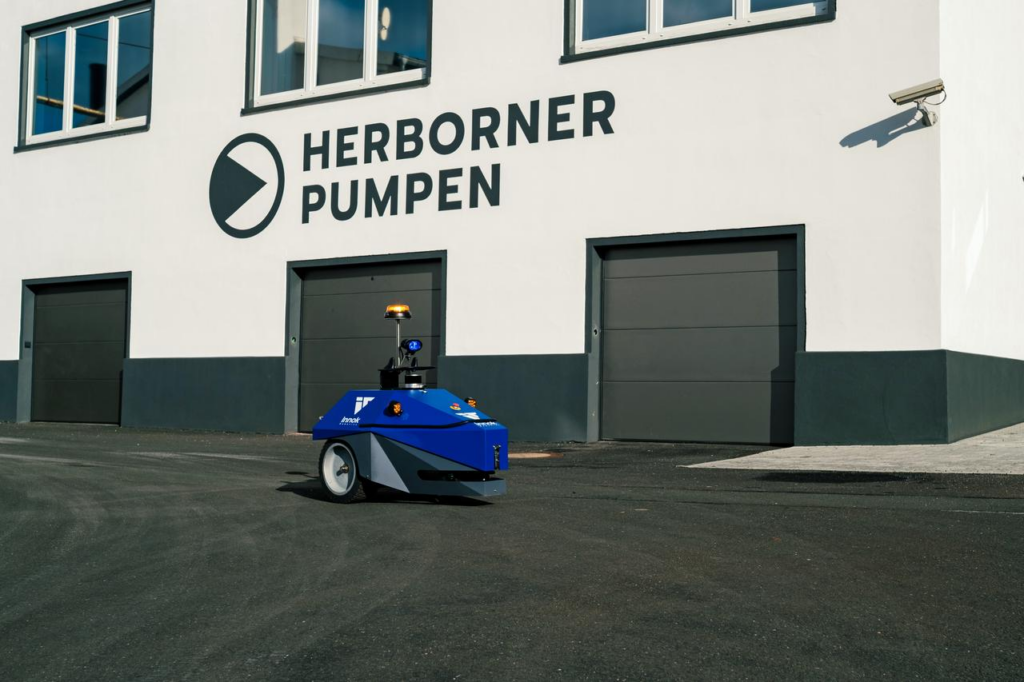
On industrial sites, robots transport materials between buildings while navigating mixed traffic. In logistics operations, they detect trailers or pallets and determine whether they are loaded. In tight spaces, close-range perception ensures safe maneuvering around equipment and infrastructure.
The result is not just functionality, but reliability – the ability to operate continuously under changing conditions.
Measurable Impact
Reliable perception directly improves performance.
Fewer false detections mean fewer unnecessary stops, increasing uptime and operational efficiency. At the same time, accurate detection of people and objects strengthens safety in shared environments.
This combination allows automation to extend beyond controlled settings and scale across real operations.
A Foundation for Scalable Autonomy
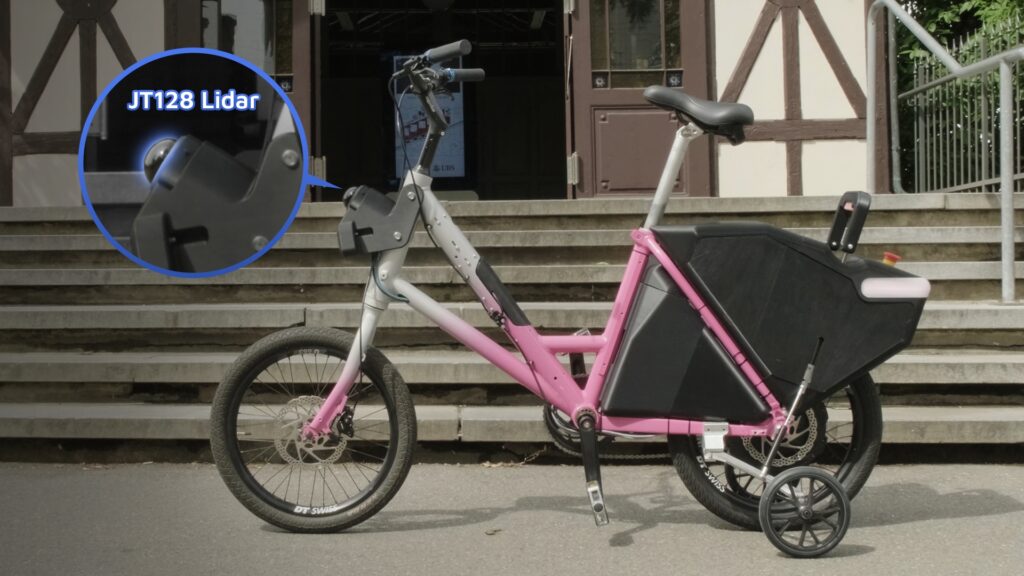
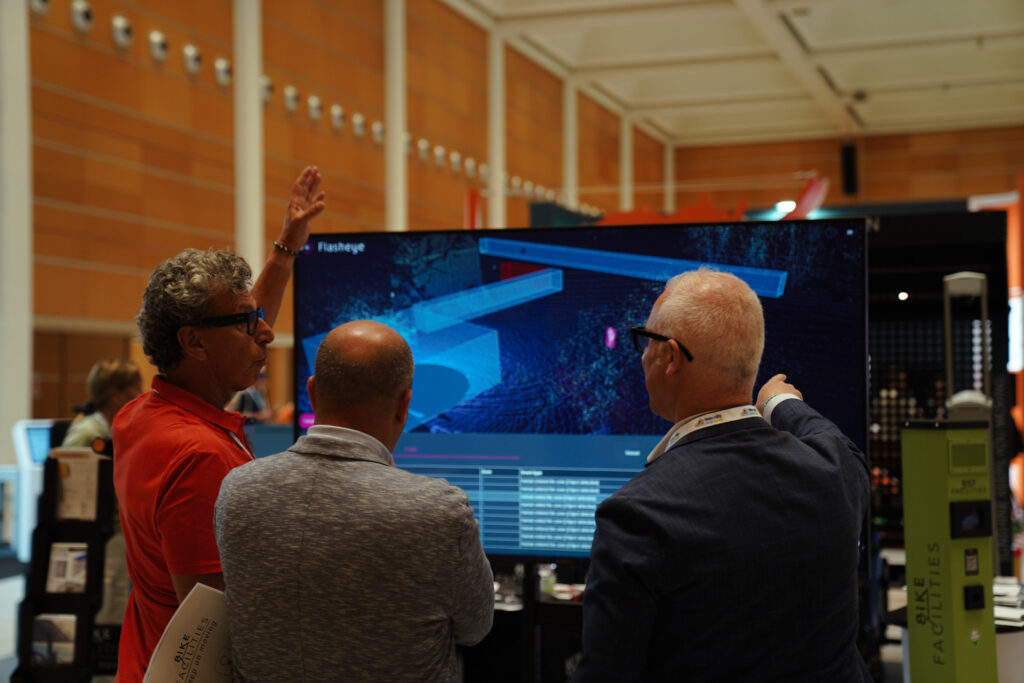
Innok Robotics applies this across multiple platforms, from industrial transport systems to specialized and public-environment applications. Despite different use cases, the requirement remains the same: consistent operation in unpredictable environments.
This is where lidar becomes essential.
Hesai’s XT32 provides the robustness and precision needed to support that consistency. It enables systems to operate not just in ideal conditions, but in the environments where automation delivers the most value.
From Limitation to Opportunity
The challenge is clear: real-world environments are complex, variable, and difficult to automate.
The solution is equally clear: reliable 3D perception.
By combining Innok Robotics’ outdoor-ready platforms with Hesai’s high-performance lidar, autonomous systems can move beyond controlled environments and operate where they are truly needed.
This is the next phase of automation.
Not defined by perfect conditions, but by the ability to perform despite them.
If you are building autonomous systems for real-world environments, contact Hesai to learn how lidar enables reliable outdoor operation at scale.
About Innok Robotics
Innok Robotics GmbH is based in Regenstauf near Regensburg, Germany. Since 2012, the company has developed autonomous mobile robots for outdoor and brownfield environments.
Innok solves automation challenges in hazardous, repetitive, and labour-intensive operations, especially where robots must move between indoor and outdoor areas without changes to existing infrastructure. Its AMRs handle rough surfaces, ramps, changing weather, and complex industrial sites.
Powered by Innok’s AI software InnokCockpit™, the robots support intralogistics, industrial transport, yard operations, and material movement. Companies including BASF, ABB, Bosch, SICK, ZF, and Roche rely on Innok’s systems.
Q&A – Lidar in Outdoor Robotics
It provides stable 3D perception independent of lighting and weather, enabling reliable operation in real-world environments.
Changing terrain, weather, and dynamic obstacles require consistent environmental awareness.
It reduces false detections and unnecessary stops, increasing uptime.
It ensures full environmental awareness without blind spots.
In industrial logistics, manufacturing sites, and public infrastructure environme